Income Tax Bands & Personal Allowance Explained
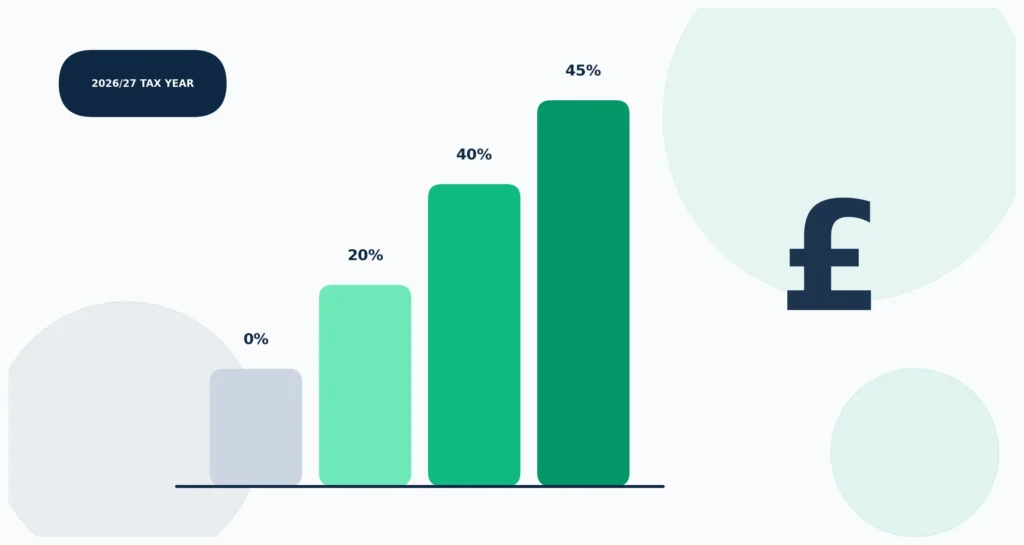
Not sure how much of your income is tax-free in 2026/27, or when the next band starts? The Personal Allowance is £12,570 this year, and everything you earn above it is taxed at 20%, 40% or 45% depending on the band it falls into. Scotland uses its own separate bands, and income above £100,000 is taxed differently again, in a way that catches a lot of people out.
This page covers the Personal Allowance, the England and Scotland tax bands, the £100,000 taper, and the other tax-free allowances that sit alongside your Personal Allowance. It also explains why 7.7 million people now pay higher rate tax, more than at any point before, even though the rates haven’t changed. Use our Take Home Pay Calculator for your own exact figure once National Insurance and pension contributions are included too.
What Is the Personal Allowance?
The Personal Allowance is the amount you can earn before Income Tax applies. For 2026/27 it’s £12,570. This figure has been frozen since April 2022 and is due to stay frozen until April 2031, so it isn’t going to rise with your next payslip.
By default, the allowance is the same for everyone. Employees, the self-employed, students and anyone in a part-time or holiday job all get the full £12,570. It applies across the full tax year, 6 April 2026 to 5 April 2027, not to each individual payslip, so a mid-year pay rise doesn’t reset it.
What Can Increase or Reduce Your Personal Tax Allowance?
Marriage Allowance and Blind Person’s Allowance can both increase your tax-free amount, and each is covered in its own section further down this page.
Your allowance can also be reduced. HMRC does this through your tax code if you owe tax from a previous year. It’s also reduced once your income passes £100,000, covered in the next section.
Calculate Your Exact Tax and Take-Home Pay
Income Tax is not the only deduction. National Insurance, pension contributions and student loan repayments come out of the same salary, so your actual take-home pay is lower than the tax figures on this page alone suggest.
Use our UK Take Home Pay Calculator to get your exact monthly, weekly, and daily figures for 2026/27, including Scotland’s bands if that applies to you.
Income Tax Bands 2026/27: England, Wales and Northern Ireland
Once your income is above the Personal Allowance, it’s taxed in bands. Only the income inside each band is taxed at that band’s rate, not your whole income.
| Band | Taxable income | Rate |
|---|---|---|
| Personal Allowance | Up to £12,570 | 0% |
| Basic rate | £12,571 to £50,270 | 20% |
| Higher rate | £50,271 to £125,140 | 40% |
| Additional rate | Over £125,140 | 45% |
These bands apply in England, Wales and Northern Ireland. Scotland’s bands are different, covered further down.
Example: A £30,000 Salary
£30,000 − £12,570 = £17,430 taxable income, all inside the basic rate band.
£17,430 × 20% = £3,486 Income Tax for the year.
Example: A £60,000 Salary
£60,000 − £12,570 = £47,430 taxable income, split across two bands.
£37,700 × 20% = £7,540
£9,730 × 40% = £3,892
Total = £11,432 for the year, an average rate of 19.1% on the full £60,000.
The £100,000 Trap: Why the Marginal Rate Hits 60%
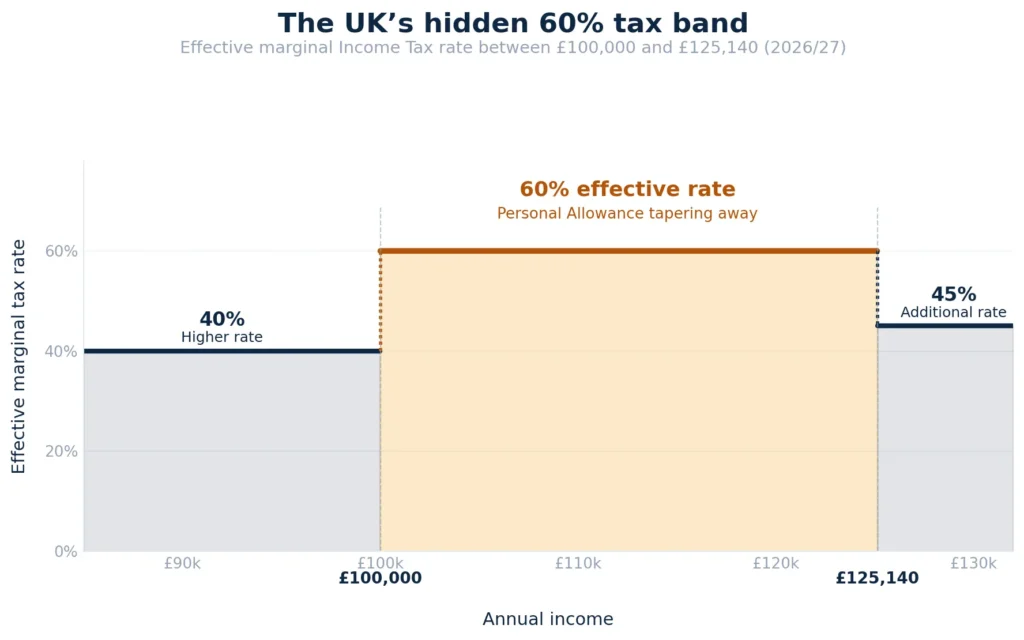
Between £100,000 and £125,140, the Personal Allowance is withdrawn. For every £2 earned above £100,000, £1 of allowance is lost, reaching zero at £125,140.
This creates an effective marginal rate of 60% in that band, higher than the 45% additional rate that starts above it. The arithmetic below shows why, using an extra £100 earned on top of £100,000.
£100 × 40% = £40 tax on the extra income itself.
£100 ÷ 2 = £50 of Personal Allowance lost, and that £50 × 40% = £20 more tax.
£40 + £20 = £60 tax on £100 of extra earnings, leaving £40. An effective rate of 60%.
The £100,000 to £125,140 band is often called the most punishing in the UK system, even though no rate above 45% officially exists. Pension contributions are commonly used to avoid it, since they reduce the income figure HMRC tests against the £100,000 threshold.
Scottish Income Tax Bands 2026/27
Scotland sets its own Income Tax bands for earnings, with six rates from 19% to 48% instead of three. See the full 2026/27 table and how it compares with England in our guide to Scottish tax bands.
How Scotland Compares With the Rest of the UK
A £30,000 salary is taxed slightly more in Scotland than in England, since part of it falls in the 21% intermediate band instead of 20%. A £45,000 salary is taxed noticeably more. Scotland’s 42% higher rate starts at £43,663, over £6,600 below the £50,270 threshold used in the rest of the UK. The £100,000 to £125,140 taper applies in Scotland too, since the Personal Allowance itself is a UK-wide figure, not a Scottish one.
Residency for this purpose is based on where you live, not where your employer is based. A Scottish taxpayer’s tax code has an S prefix.
Tax-Free Allowances Beyond the Personal Allowance
A number of allowances sit alongside the Personal Allowance and reduce tax on specific types of income.
| Allowance | 2026/27 amount | What it covers |
|---|---|---|
| Marriage Allowance | £1,260 | Transferable between spouses or civil partners if one doesn’t use their full Personal Allowance |
| Blind Person’s Allowance | £3,250 | Added on top of the Personal Allowance for those registered blind |
| Personal Savings Allowance | £1,000 basic rate, £500 higher rate, £0 additional rate | Tax-free interest from savings |
| Dividend Allowance | £500 | Tax-free dividend income before dividend tax rates apply |
Marriage Allowance
Marriage Allowance is only available one way round. The lower earner must have income below the Personal Allowance, and the higher earner must stay a basic rate taxpayer. It isn’t available once the higher earner moves into the 40% band. £1,260 transferred is worth up to £252 a year in reduced tax to the partner receiving it.
Personal Savings Allowance and Dividend Allowance
The Personal Savings Allowance shrinks as income rises and is removed entirely once someone becomes an additional rate taxpayer, so anyone earning over £125,140 pays tax on savings interest from the first pound. Dividend income is taxed separately from salary but is added on top of it, so total income, including salary, decides which band dividends fall into.
High Income Child Benefit Charge: The Other £60,000 Threshold
This charge is separate from Income Tax bands but is closely linked to them. Once the higher earner in a household passes £60,000, Child Benefit starts being withdrawn. It catches people who assume Child Benefit has nothing to do with their tax band.
The charge is 1% of Child Benefit for every £200 earned above £60,000, so it’s fully withdrawn by £80,000. If one parent earns £70,000 and the other earns nothing, half the Child Benefit is still lost, because only the higher earner’s income is counted, not combined household income.
This threshold moved from £50,000 to £60,000 in April 2024. It hasn’t been linked to inflation since, so it’s affected by the same freeze pulling more people into higher rate tax.
Why More People Are Paying Higher Rate Tax This Year
The Personal Allowance and the £50,270 higher rate threshold have been frozen since April 2022 and are due to stay frozen until April 2031. Wages have risen in that time, so more of each pay rise is now taxed rather than staying tax-free. This is known as fiscal drag, and the 2026/27 figures show its scale.
The Numbers Behind Fiscal Drag
An estimated 7.7 million people now pay higher rate tax, up 34% from 2023/24. An estimated 1.3 million people pay additional rate tax for 2026/27, up around 34% from 2023/24 and roughly double the figure from five years ago. Across all bands, the UK has an estimated 40.8 million taxpayers in total, up from 36.7 million in 2023/24.
None of this is caused by a rate change. Every rate on this page is the same as it was several years ago. What has changed is how many people a fixed set of thresholds now catches, as pay rises pull more people over lines that haven’t moved.